Protests took place in Tel Aviv, Jerusalem, Haifa, and Beersheba, as a survey found broad but uneven support among Jewish Israelis for Operation Roaring Lion.
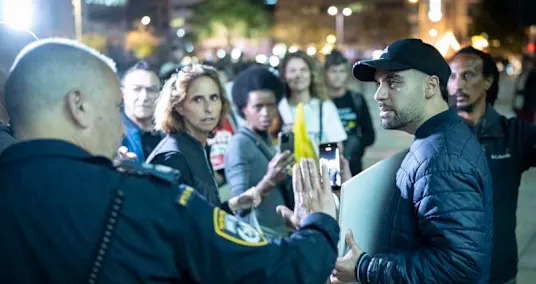
Israel Police arrested 21 anti-war protesters Saturday night as demonstrations against the conflict with Iran expanded in multiple cities despite restrictions on public gatherings.
Protests took place in Tel Aviv, Jerusalem, Haifa, and Beersheba, with hundreds of participants reported in Tel Aviv and Jerusalem and about 100 in Haifa, marking the largest turnout since weekly demonstrations began. Authorities said 13 people were arrested in Tel Aviv and eight in Haifa.
Police said the gatherings were not approved under Home Front Command regulations that ban events with more than 50 people. Officials said the increase in turnout followed calls by groups opposing the government to protest despite the restrictions.
“During a situation assessment that took place at the scene with a Home Front Command representative… it was clarified that there was a real risk to human life and accordingly, Yarkon [precinct] police commander Tzachi Sharabi ordered the gathering to be dispersed,” police said.
Hadash-Ta’al chairman Ayman Odeh, an Arab lawmaker involved in the protests, criticized the police response, calling officers fascists “in the service of the government” and saying they were afraid of “the heroic citizens who went out, despite everything, to make their voice heard.”

Survey shows broad, uneven support for war
The demonstrations come as a March 2026 survey by the Israel Democracy Institute found broad but uneven support among Jewish Israelis for Operation Roaring Lion. Support was strongest on the Right at 87% and about half on the Left.
The survey also found that Jewish and Arab respondents largely agreed that Iran’s resilience has been stronger than expected. Most Jewish respondents said Israeli society could sustain the campaign for up to one month, while 28% said as long as needed. Arab respondents were less optimistic about how long the public could endure the conflict.
A majority of Jewish respondents said Prime Minister Benjamin Netanyahu’s decision was driven by security considerations, while most Arab respondents viewed it as political.
LATEST POSTS
- 1
 1st results from Blue Ghost lunar lander reveal how much we still don't know about the moon
 - 2Carina Nebula shines with white-blue stars | Space photo of the day for Jan. 5, 2026
- 36 Exceptionally Appraised Summer Travel Objections
- 4Instructions to Augment the Presentation of Your Kona SUV
- 5Earth's newfound 'episodic-squishy lid' may guide our search for habitable worlds



- Find the Native Culinary Customs: Local Flavors
- Scientists document a death from a meat allergy tied to certain ticks
- Go on A Careful spending plan: Modest Objections for Your List of must-dos
- 5 Cell phones of the Year
- Florence's Uffizi Gallery moves treasures to safety after cyberattack
- The 15 Most Compelling Books in History
- A definitive Burger Confrontation: Which One Rules?
- The Job of a Migration Legal advisor: How They Can Help You
- Becoming amazing at Arranging Pay Raises