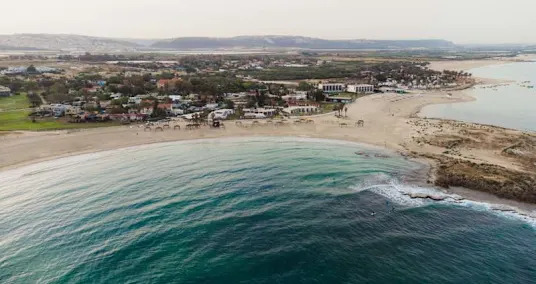
The discovery was made in an ancient shipwreck in the Dor Lagoon near the Carmel Coast, where archaeologists recovered nine pieces of unprocessed iron known as “blooms.”
Researchers from the University of Haifa said Wednesday that an underwater excavation off Israel’s northern Mediterranean coast uncovered what they described as the earliest known cargo of raw iron transported by ship, dating back around 2,600 years, Xinhua reported.
The discovery was made in an ancient shipwreck in the Dor Lagoon near the Carmel Coast, where archaeologists recovered nine pieces of unprocessed iron known as “blooms.” According to the university, the find provides direct evidence of how iron was transported in its earliest commercial stages.
The material was preserved in its original form, having solidified directly in a smelting furnace without undergoing forging or further refinement. Researchers said this distinguishes the cargo from later iron artifacts that typically show signs of shaping or tool-making.
Unlike copper and bronze, which could be melted into liquid form in ancient production processes, iron was heated with charcoal to produce a solid, porous mass. That mass was generally hammered to remove impurities and create denser material suitable for tools and implements.
The recovered blooms showed no indication of that secondary processing stage, suggesting they were transported immediately after production.

Earliest iron shipment discovered in ancient Mediterranean wreck
To determine the age and condition of the cargo, researchers conducted microscopic and chemical analyses.
Radiocarbon dating was also carried out on charred wood embedded in one of the pieces, helping confirm the timeline of the shipment. The findings were published in the journal Heritage Science.
Researchers said the cargo indicates that iron was being moved in raw form from production sites to other locations for further processing, pointing to a level of specialization in ancient manufacturing and trade networks in the Mediterranean.
The University of Haifa said the discovery provides new insight into early iron production and distribution practices in the region.
LATEST POSTS
- 1
 South Africa collects record $117B tax haul
 - 2'Euphoria' Season 3 trailer includes Eric Dane's final appearance, Jacob Elordi and Sydney Sweeney at the altar and Rue's 'Breaking Bad' era
- 3Germany's Merz under fire in Brazil for his comments on Amazon host city of COP30
- 4New Cheetos and Doritos will be free of artificial dyes
- 5Japan prepares to restart world's biggest nuclear plant, 15 years after Fukushima




- Believe Should Unwind? Look at These Scaled down Games
- Watch SpaceX launch powerful ocean-mapping satellite for Europe and NASA early Nov. 17
- Ethiopian earthquakes and volcanic eruptions: earth scientist explains the link
- Conquering Social Generalizations: Individual Accounts of Strengthening
- 7 Strange Devices to Make Your Party Stick Out!
- 4 Creative Savvy Home Gadgets of 2024: Reforming Home Robotization and Security
- How Google, Microsoft, Walmart, and other corporate giants are preparing for an aging workforce
- Former biotech CEO sued over COVID vaccine alleged insider trading
- Want to make America healthy again? Stop fueling climate change


